
Blog Archives
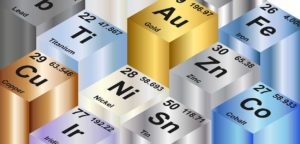
Grade Austenitic Stainless Steels. Description Austenitic Stainless Steel Elements: Of all elements added to the basic alloy of chromium and iron, nickel is the most important. It not only improves corrosion resistance but also changes the alloy’s structure and mechanical properties. Austenitic Stainless Steel Structure: As nickel is added in increasing amounts to a ferritic…
Grade MTEK N-7M and N-12MV (N30007 / Similar to Hastelloy® B Mod) severe corrosion and heat resistant alloy. Description Nickel-Moly alloys. Properties – Why select this material Excellent strength and ductility at ambient and elevated temperatures. Resistant to oxidizing conditions up to 1400°F / 760°C and up to substantially higher temperatures in reducing conditions.…
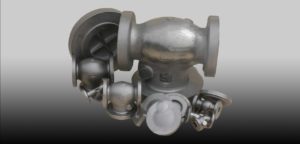
There are many benefits of using the sand casting process versus traditional manufacturing processes. If you asked multiple metal casting suppliers the main benefit, many would say the cost-effectiveness when internal passageways are required. How Does A Metal Casting Supplier Produce A Finished Component with These Passageways? The answer is simple – by using core…

Oconomowoc, WI – Mike Williams, Chairman of the Wisconsin Committee for Employer Support of the Guard and Reserve Committee (ESGR), has announced Jamie Schindel, Machine Shop Supervisor of MetalTek International, was presented with a Patriot Award by ESGR representative Bill Rheingans, Area 2 Chair in recognition of extraordinary support of one of their employees serving…
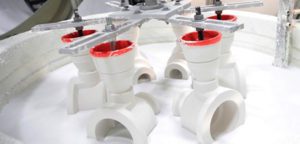
Investment casting can solve manufacturing challenges by reducing secondary machining, producing complex near-net-shape parts, supporting intricate internal structures, and improving consistency across repeat production. The process can also help manufacturers optimize tooling, material selection, surface finish, and overall production workflows. The examples below show how investment casting can be applied to improve component design, manufacturing…
The Effect of Temperature on Corrosion of Metals As the performance demands on metals tend to increase as temperature increases, so do the types of corrosive attacks to which the metal is likely to be subjected. When we think of significant industries and applications that are most likely to face the combined effects of high…

Overview Every material selection decision includes tradeoffs. Performance can come at a price. But there is little sense in paying for capabilities that are not needed. The following suggests a framework for selecting one of a family of wear-resistant materials from another. Comparisons Cost Cost is rarely ignored, so it is helpful to compare certain…

The days when manufacturers had a host of technical experts on staff are past in many industries. And this at a time when material choices are broader and product performance demands are higher than they have ever been. So the situation will not get any easier. Here are just four real life examples where MetalTek…
Nickel Iron Chrome (Ni-Fe-Cr) Alloys. This group includes grades HX and HW. Description These high-temperature stainless steel have the highest nickel content (around 60%) in the high-temperature family. Properties – Why select this material HX and HW provide the highest carburization resistance of the standard alloys. Good oxidation resistance. Good thermal shock resistance. Some Typical…

Duplex stainless steels are alloys with metallurgical structures generally regarded as being approximately equal parts of austenite and ferrite, with a 60/40, 40/60-phase distribution being the envelope widely considered as acceptable. The combination of austenite/ferrite produces alloys with twice the strength of conventional austenitic stainless steels. Duplex stainless steels are virtually immune to stress corrosion…