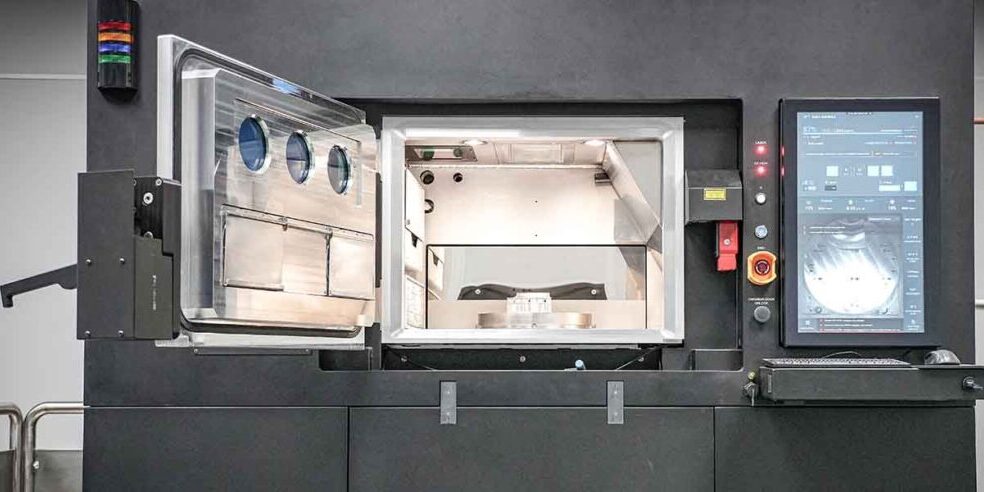
Additive Manufacturing
What Is Additive Manufacturing?
Additive manufacturing, often called 3D printing, is a process of building parts layer by layer directly from a digital model. It enables complex geometries, lightweight structures, and rapid prototyping with minimal material waste. Common methods include laser powder bed fusion (LPBF), stereolithography (SLA), and fused deposition modeling (FDM).
MetalTek uses additive manufacturing for low-volume production, rapid prototyping, and patternmaking, helping customers shorten development cycles and reduce lead times.
Unlike standalone additive providers, MetalTek combines additive manufacturing with metal casting expertise. This allows us to:
-
Recommend the optimal manufacturing process based on your needs
-
Support a seamless transition from prototype to production
-
Deliver a single trusted source for critical components
Contact a MetalTek Key Account Manager to discuss how additive manufacturing can support low-volume production or accelerate development of your metal cast components.
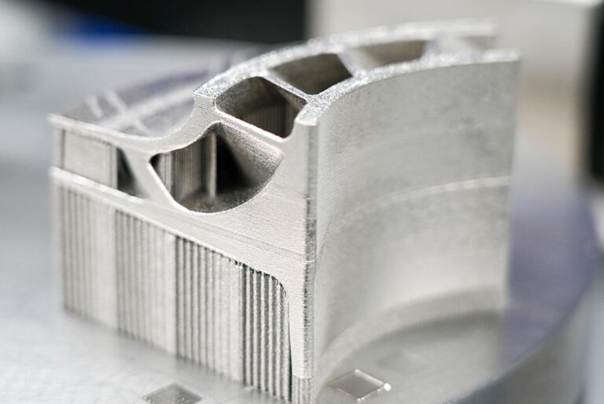
What Is Laser Powder Bed Fusion (LPBF) Additive Manufacturing?
Laser powder bed fusion (LPBF) is a precision metal additive manufacturing process that builds components layer by layer using a high-powered laser to fuse metal powder. The result is precise geometries, fine detail, and exceptional material performance.
MetalTek's Wisconsin Investcast Division offers LPBF additive manufacturing for low-volume production of high-performance metal components using the superalloy MTEK 718 (Nickel 718). This capability supports manufacturers in aerospace, defense, energy, and industrial markets that require components to perform in high-temperature, high-stress, and corrosive environments.
LPBF is ideal for production when traditional methods such as metal casting, including investment casting, or hog-out machining are not practical for meeting low volume, complex geometry, or accelerated timeline requirements of a component. It helps customers reduce risk and bring critical components to market faster.
When To Use LPBF Additive Manufacturing for Low-Volume Production
LPBF additive manufacturing is ideal for low-volume production when:
-
Production volumes are too low to justify metal casting tooling
-
Hog-out machining would result in excessive material waste or cost
-
Complex geometries are difficult or inefficient with traditional methods
-
Accelerated timelines are required for critical components
Wisconsin Investcast has an LPBF part size envelope up to 12.4 in. diameter by 15.75 in. height (315 mm by 400 mm).
Benefits Of MTEK 718 (Nickel 718) For LPBF Additive Manufacturing
MTEK 718 (Nickel 718) is a proven superalloy widely used in aerospace, defense, energy, and other demanding industrial environments. MTEK 718 is selected for applications requiring:
-
High strength at elevated temperatures
-
Excellent fatigue and creep resistance
-
Resistance to oxidation and corrosion
LPBF using MTEK 718 is ideal for components requiring high strength, complex geometry, and resistance to high heat, fatigue, and corrosion.
Using Additive Manufacturing With Metal Casting
Additive manufacturing can complement metal casting by shortening lead times, accelerating development, and increasing design flexibility. By combining these processes, manufacturers gain the design versatility of additive manufacturing alongside the proven durability and material performance of cast components. MetalTek uses additive technologies to accelerate early-stage development and streamline metal casting production.
Rapid Prototyping For Metal Casting
Additive manufacturing enables faster production of prototypes to support investment casting development. Processes such as laser powder bed fusion (LPBF) and stereolithography (SLA) are used to evaluate geometry, validate designs, and reduce development risk before committing to production.
These capabilities help shorten development cycles and accelerate the
transition to production-ready cast components.
Patternmaking for Metal Casting
Additive manufacturing is used to produce patterns for investment casting and sand casting, reducing reliance on traditional tooling. Technologies such as SLA and fused deposition modeling (FDM) enable faster pattern production and greater flexibility for low-volume or complex components.
This approach helps shorten lead times and improve efficiency in early-stage and low-volume casting programs.
Related Blogs
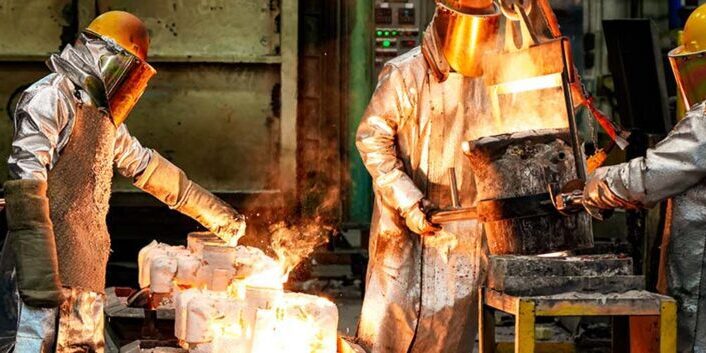
Investment Casting vs. CNC vs. 3D Printing: The Best Way To Make Pump Impellers
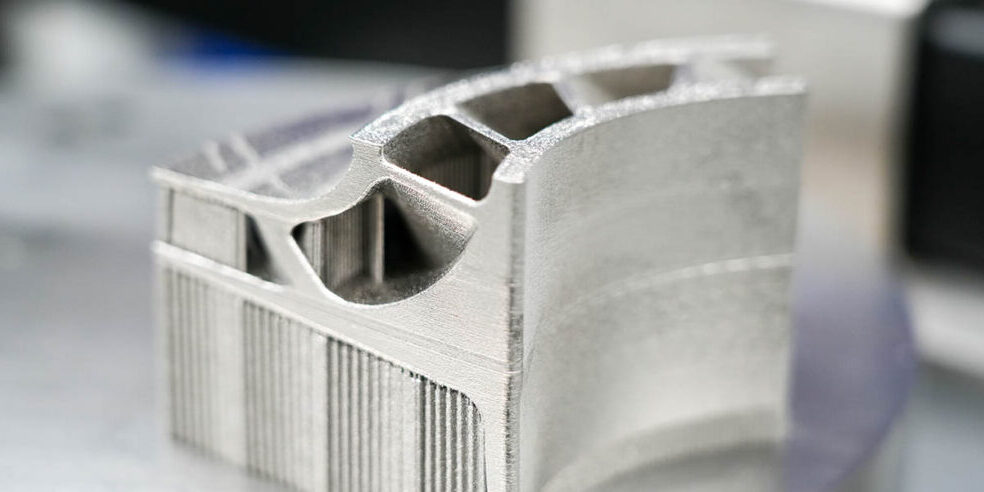
Additive Manufacturing vs. Casting: When to Use Each