
Blog Archives
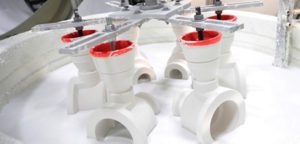
MetalTek offers more metal casting process diversity. Your ability to source centrifugal, sand, investment, HPLT, or continuous cast products from a single company is not available anywhere else in the world. Not sure which precision casting process is right for your components or application? Read the below article on what is casting and its types.…
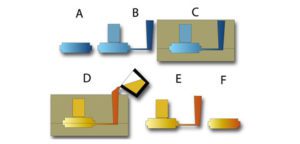
Sand Casting Sand casting can be traced back to earlier than 1000 B.C. It is widely accepted as the oldest known casting process. The sand-casting process has evolved significantly since the beginning. But the process of how to sand cast has not strayed. The cast molding process is basic, create a cavity in the shape…
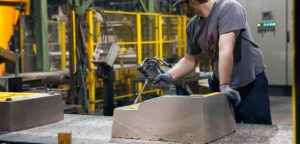
Benefits of Using Sand Casting 1. Nearly any alloy: Sand castings can be readily produced in nearly any ferrous or non-ferrous alloy. Some other casting processes will melt and pour super-alloys in a vacuum, but that is not typically done as a sand casting. Some materials cannot be “worked”, and must be produced as a…
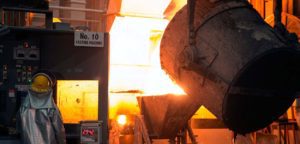
While metal casting might be the best process to manufacture a wide range of components, depending on your needs, the forging process could be the best option. Or vice-versa. This is why it helps to know the key differences between forging and casting. So here are 5 things to consider when deciding if a casting…
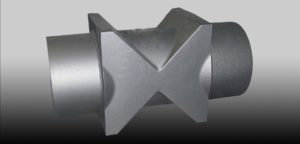
Ferrous alloys (ferro alloys) or metals are metals that consist mostly of iron (Fe). Steel is an iron-based alloy containing typically less than 1% carbon, where iron frequently contains 2% or more carbon. Iron and steel are widely available, strong, cheap, and can be shaped by casting. Ferrous alloy properties can be improved by heat…
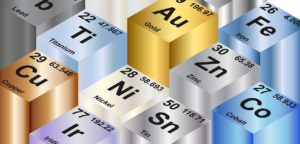
By way of definition, heat-resistant applications typically occur above 1200°F/670°C and require the use of materials that have enhanced resistance to oxidation and other environment-specific gases and mechanical property degradation. Performance in these high-temperature environments is indicated by acceptable levels of tensile strength, stress rupture life, and creep strengths that correspond to the required time…
Tin Bronze alloys consist of copper-based materials with the major alloying element being tin. The presence of tin provides high mechanical properties, the offset being that the addition of tin adds to the metal cost. The high tin bronzes, however, are particularly suited for certain applications for which the less expensive bronzes are not suitable.…
Corrosion is the loss of metal due to a reaction with the environment, and is measured as the percentage of weight loss or as the penetration rate of the corrosion, perhaps measured in inches per year. Corrosion can develop in the presence of liquids or gases. It may occur at any temperature, although generally the…
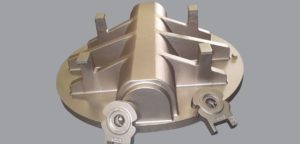
Aluminum Bronze alloys are a family of copper-based alloys that use iron and nickel in their chemistry but rely on aluminum as the principal alloying element. Aluminum significantly adds to the strength to the point that it is like that of medium carbon steel. The additional advantage is that aluminum bronze properties also include excellent…
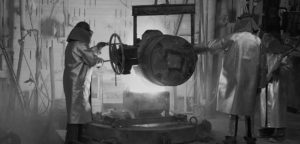
Today, metal casting is a complex and intricate process which requires exact chemistry and flawless execution. While current methods may be relatively new when compared to the history of human civilization, the first casting of metals can actually be traced all the way back to around 4000 BC. In those times, gold was the first…