How Laser Powder Bed Fusion (LPBF) Works for Metal Additive Manufacturing
Metal additive manufacturing is increasingly used to produce components that are difficult or impractical to manufacture using traditional methods. As design requirements become more complex, additive manufacturing technologies such as laser powder bed fusion (LPBF) provide engineers with new ways to create high-performance metal parts directly from digital models.
Among additive manufacturing processes, LPBF is widely used to reliably produce metal components with precise geometries and fine detail, shortening lead times by:
- Enabling low-volume production when traditional methods such as investment casting or hog-out machining are not practical
- Accelerating component development through rapid prototyping and design validation before committing to tooling
Understanding how LPBF works is the first step toward determining when it makes sense to include it in a broader metal additive manufacturing strategy.
What Is Laser Powder Bed Fusion?
Laser powder bed fusion (LPBF) is a metal 3D printing process that builds parts layer by layer using a high-powered laser to selectively melt fine metal powder. Rather than removing material from a solid block, as in CNC machining, powder bed fusion adds material only where needed.
The LPBF process relies on a precise combination of metal powder feedstock, highly controlled thin powder layers, and focused thermal energy. As the laser passes over the powder bed, it melts the metal particles together to form a fully dense, solid structure.
You might hear engineers refer to this process by several different names. Depending on the equipment manufacturer and the specific patent, the technology is also known as direct metal laser sintering (DMLS) or selective laser melting (SLM). While there are minor technical distinctions between these terms, they all describe the same fundamental powder bed fusion technology used in modern metal additive manufacturing capabilities.
Step-by-Step: How Laser Powder Bed Fusion Works
To fully grasp the capabilities of this technology, it helps to break down the process into its four primary stages.
1. Metal Powder Is Spread Across the Build Plate
The process begins in a sealed chamber filled with an inert gas, such as argon or nitrogen, to prevent oxidation. A recoater spreads a thin, uniform layer of fine metal powder across the build plate, typically 20 to 60 microns thick.
2. A Laser Selectively Melts the Powder
A high-powered laser scans the part’s cross-section using a digital CAD file. The laser melts the powder, fusing it to the layer below and forming a dense metal structure.
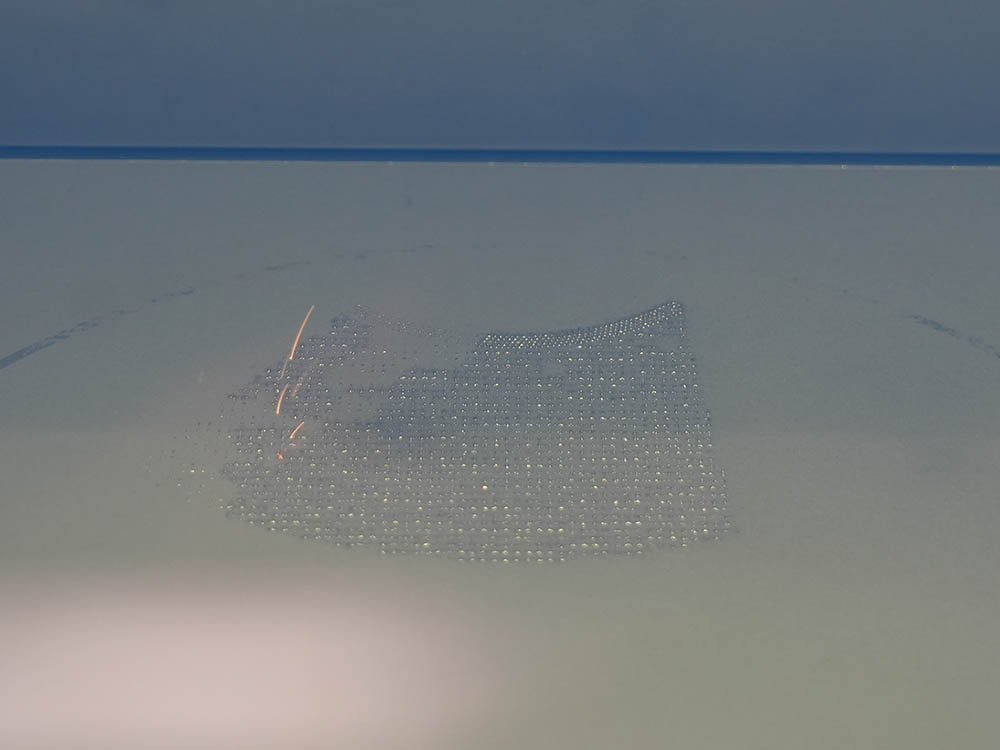
3. The Build Platform Lowers and a New Layer Is Applied
The build platform lowers slightly, and a new layer of powder is spread across the surface. The laser repeats the process, building the component layer by layer.
4. Post-Processing Finishes the Component
After printing, the part undergoes post-processing steps such as stress-relief heat treatment, support removal, and machining to meet final dimensional and surface requirements.
Advantages of Laser Powder Bed Fusion
LPBF offers several distinct advantages that make it an effective option for modern manufacturing demands. One primary benefit is that it does not require tooling. Manufacturers can produce parts without the cost and lead time associated with tooling, making LPBF well-suited for low production volumes or applications where designs are still evolving.
LPBF also enables rapid iteration. Engineers can move quickly from a digital model to a physical part, evaluate performance, and adjust without changing tooling. This makes it a practical approach for prototyping components that may later be produced using other methods, such as investment casting.
In addition, LPBF can produce complex geometries and internal features that are difficult to achieve through traditional manufacturing methods. It also enables part consolidation, reducing assembly steps and potential failure points. Because LPBF builds parts layer by layer, material usage is more efficient than in processes like machining, particularly for high-value alloys.
You can learn more about how LPBF stacks up in our blog, Additive Manufacturing vs. Casting.
Applications for LPBF Metal Components
LPBF is widely used in industries that require high-reliability components with tight tolerances and complex geometries.
In aerospace, LPBF is widely used to produce lightweight brackets, structural components, and engine parts. These applications often rely on high-performance materials such as titanium and nickel alloys. For example, MetalTek’s MTEK 718, a castable version of Nickel 718 superalloy (UNS N07718), is commonly used for components exposed to extreme temperatures, and LPBF enables features such as internal passageways to be built directly into the part.
The energy sector uses LPBF to manufacture turbine components, fuel nozzles, and flow control devices, where performance and material properties are critical. In process equipment manufacturing, LPBF can be used for custom tooling, manifolds, and specialized pump components, particularly when designs require internal features or rapid iteration.
How LPBF Compares to Other Manufacturing Methods
LPBF is a powerful manufacturing method, but it is not necessarily intended to replace traditional processes. Instead, it is most effective when applied alongside existing methods such as investment casting and CNC machining.
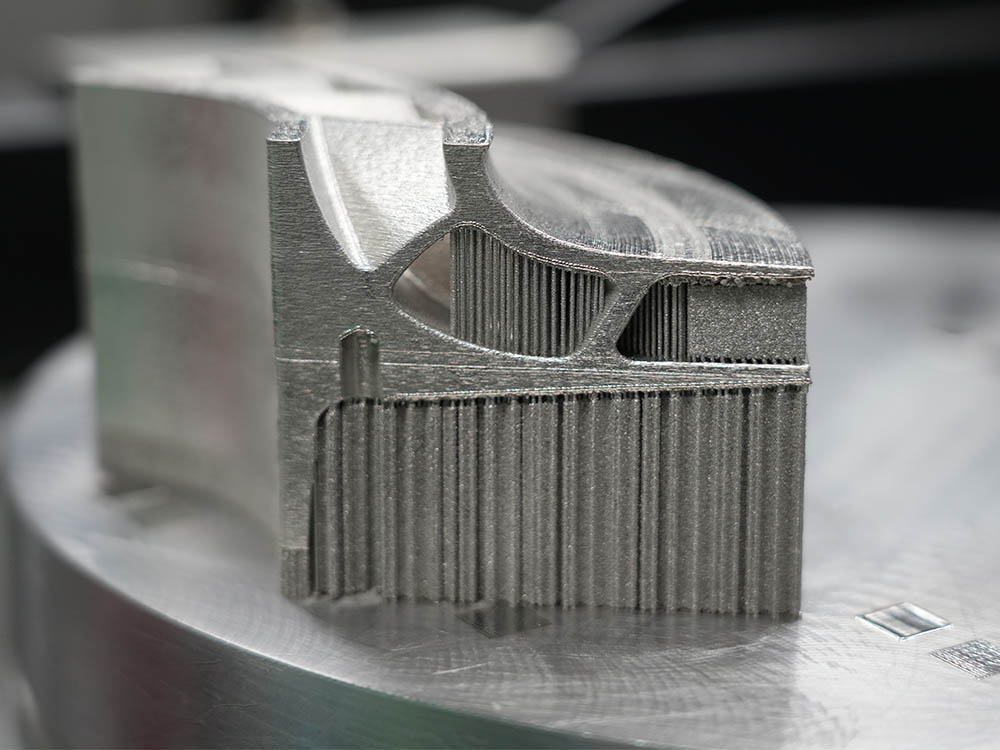
When comparing LPBF to investment casting, you must consider complexity and volume. Investment casting remains highly efficient and cost-effective for producing medium- to large-volume complex parts with excellent surface finish. LPBF, on the other hand, excels when producing highly complex parts in lower volumes without the need for expensive tooling or lengthy lead times.
Compared to CNC machining, the difference often comes down to material waste and internal geometry. CNC machining involves removing material from a solid billet, which can result in significant material waste, especially when working with expensive alloys. Furthermore, a CNC machine cannot cut complex internal channels that a cutting tool cannot reach. In contrast, LPBF builds the part layer by layer, generating minimal waste and effortlessly creating intricate internal features.
For a deeper dive into these comparisons, check out our guide on Investment Casting vs CNC vs 3D Printing: The Best Way to Make Pump Impellers.
When Laser Powder Bed Fusion Makes the Most Sense
Additive manufacturing is not the perfect solution for every single component. To maximize the return on investment for LPBF, it is critical to apply the technology where it provides the most value.
Laser Powder Bed Fusion is most beneficial when you need highly complex components that are difficult to manufacture through traditional methods, such as investment casting. It is ideal for low production volumes, prototyping, or situations requiring rapid design iterations. If you are working on a project that demands significant weight reduction without sacrificing strength—such as an aerospace structural component—LPBF is an excellent choice. Additionally, parts that require intricate internal features are prime candidates for this technology.
Discover more about when to choose this process by reading 3D Metal Printing and Metal Casting.
Conclusion
Laser Powder Bed Fusion is a valuable manufacturing approach when appropriately applied. It enables manufacturers to produce low-volume metal components and rapidly prototype designs before committing to the tooling required for investment casting.
At MetalTek, our experts use LPBF alongside investment casting to support both early-stage development and production needs. By combining additive manufacturing with our metal casting expertise, we help customers determine the most effective approach based on part complexity, volume, and performance requirements.
To learn more about how MetalTek can support your next project, explore our metal additive manufacturing capabilities, or contact us.
Have questions?
Download Our Alloy Guide
Download Our Where Used Guide
Blog Tags
Related Blogs
Nuclear Metal Castings for Small Modular Reactors and Microreactors
What Is HY-80 Steel? A Comprehensive Guide