What Is HY-80 Steel? A Comprehensive Guide
By: Roger Broman
HY-80 steel is a high-yield, low-alloy steel developed for demanding applications where strength, toughness, and reliability are critical. Originally developed for naval defense use, HY-80 is a trusted material for high-strength components operating in high-pressure marine environments.
This guide provides a comprehensive overview of HY-80 steel, including HY-80 composition, mechanical properties, HY-80 weldability, material specifications, common applications, and manufacturing considerations. It also explains why producing HY-80 components requires specialized expertise and why only a limited number of manufacturers are qualified to work with this alloy.
For organizations evaluating HY-80 for mission-critical components, this page serves as a foundational technical reference and a starting point for deeper evaluation.
Overview of HY-80 Steel
HY-80 belongs to the family of high-yield (HY) steels, where the designation “80” refers to a minimum yield strength of 80 ksi. These steels were engineered to deliver a balance of high strength, excellent fracture toughness, and reliable performance under dynamic loading and harsh environmental conditions.
HY-80 steel is commonly associated with naval vessels, submarines, and defense systems, but its performance characteristics make it well-suited for demanding marine and high-pressure applications where reliability is critical.
Unlike commodity structural steels, HY-80 is tightly controlled in terms of chemistry, processing, and certification. As a result, it is typically produced and fabricated only by manufacturers with the technical capability and quality systems required to meet stringent Naval Sea Systems Command (NAVSEA) standards.
HY-80 Steel Composition
The performance of HY-80 steel is driven by its carefully controlled chemical composition. As a low-alloy steel, HY-80 incorporates modest amounts of alloying elements to enhance strength, toughness, and resistance to cracking without compromising weldability.
While exact HY-80 compositions are governed by applicable HY-80 material specifications, HY-80 steel generally includes controlled levels of carbon along with alloying elements such as nickel, chromium, and molybdenum. Together, these elements contribute to the alloy’s ability to maintain mechanical integrity under high stress and in low-temperature environments.
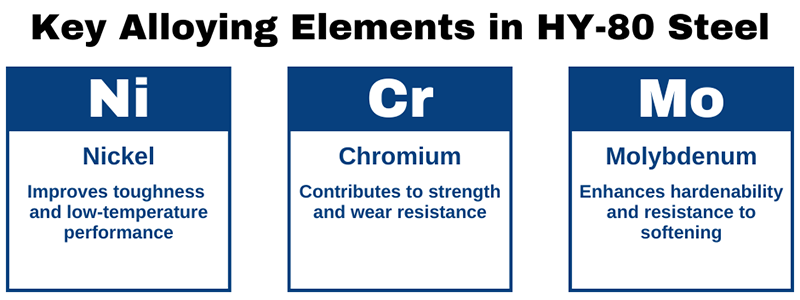
Key Alloying Elements in HY-80 Steel
Nickel improves toughness and impact resistance, particularly at low temperatures. Chromium contributes to strength and wear resistance, while molybdenum enhances hardenability and resistance to softening during heat treatment. Carbon levels are kept low enough to support weldability while still achieving the required mechanical properties.
For detailed chemical composition limits and HY-80 specification requirements, MetalTek provides a dedicated HY-80 alloy data page outlining the applicable standards and technical publications governing this material.
HY-80 Mechanical Properties
HY-80 steel is valued for its combination of high yield strength, tensile strength, and fracture toughness. These properties allow components made from HY-80 to withstand heavy loads, repeated stress cycles, and sudden impacts without catastrophic failure.
Strength and Toughness Characteristics
HY-80 offers significantly higher strength than many conventional structural steels due to its minimum yield strength of 80 ksi. More importantly, it maintains excellent toughness, reducing the risk of brittle fracture in demanding service conditions.
This balance of strength and toughness makes HY-80 especially well-suited for applications where components are subject to dynamic loads, vibration, or shock.
Performance at Low Temperatures
One of the defining characteristics of HY-80 steel is its ability to maintain toughness and structural integrity at low temperatures. This makes it a preferred material for marine and subsea environments, where components may be exposed to cold seawater and deep-ocean conditions.
HY-80 Material Specifications and Standards
HY-80 steel is produced and qualified under strict material specifications governed by NAVSEA that define chemical composition, mechanical properties, heat treatment requirements, and testing protocols. These requirements are essential to ensuring consistent performance in critical applications.
Typical Mechanical and Chemical Requirements
Rather than relying on generic material descriptions, engineers and procurement teams should reference applicable NAVSEA and related technical publications when specifying HY-80 steel. These documents define the required properties and acceptance criteria that manufacturers must meet.
MetalTek maintains detailed specification information for HY-80 on its alloy-grade UNS HY-80 specification page, which serves as a technical reference for engineers seeking compliance-driven material data.
HY-80 Weldability and Fabrication Considerations
Despite its high strength, HY-80 steel is designed to be weldable when proper procedures are followed. However, welding and fabrication require experience and careful process control to preserve the alloy’s mechanical properties.
Heat Treatment and Welding Best Practices
HY-80 typically requires controlled heat treatment to achieve the desired balance of strength and toughness. Welding procedures must account for preheat and interpass temperature control.
Common Applications of HY-80 Steel
HY-80 steel is used in applications where high strength, toughness, and reliability are mandatory for safe, long-term service.
Marine and Naval Applications
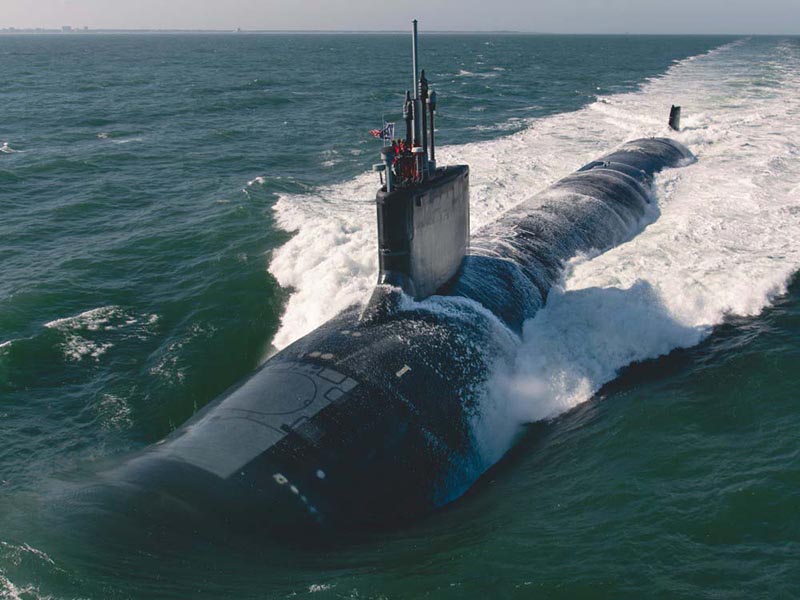
HY-80 is widely used for submarine and naval components, including structural elements and high-pressure parts designed for harsh marine environments.
Pressure Housings and High-Pressure Vessels
The alloy’s strength and fracture resistance make it suitable for pressure housings and specialized high-pressure vessels operating under extreme external pressures.
Defense Components
HY-80 is commonly specified for defense applications where components must withstand shock, impact, and dynamic loading without failure.
Deep-Sea and Subsea Systems
For deep-sea exploration systems, remotely operated vehicles (ROVs), and subsea equipment, HY-80 provides dependable performance in high-pressure, low-temperature environments.
How HY-80 Steel Is Manufactured
HY-80 components can be produced using several manufacturing approaches, including forging, machining from plate, and casting. Each method presents tradeoffs in terms of cost, geometry, lead time, and material efficiency.

Casting vs. Forging vs. Machining from Plate
For complex geometries or large components, casting can offer significant advantages by producing near-net shapes and reducing machining requirements. In addition to material efficiency, near-net shaping can help preserve near-surface mechanical properties by minimizing the removal of heat-treated material during machining.
Forging provides excellent mechanical properties but may be limited in geometry and cost effectiveness. Machining from plate is often used for simpler shapes but can result in material waste and higher production costs.
MetalTek specializes in manufacturing HY-80 components using sand casting, a process that enables complex geometries while meeting the alloy’s demanding mechanical requirements. This capability is uncommon due to the technical challenges associated with casting HY-80 steel.
Why HY-80 Steel Is Challenging to Produce
Producing HY-80 steel components is not a simple matter of pouring metal or shaping stock material. The alloy’s sensitivity to chemistry, heat treatment, and processing conditions means that small deviations can lead to cracking, inconsistent HY-80 properties, or failure to meet specifications.
As a result, only a limited number of foundries and manufacturers are certified and experienced enough to reliably produce HY-80 components that meet applicable standards.
Why Work With MetalTek for HY-80 Steel
MetalTek is among a select group of manufacturers certified to produce HY-80 steel components. Through our Carondelet Division, MetalTek combines metallurgical expertise, controlled processes, and specialized sand casting capabilities to manufacture HY-80 parts for critical applications.
Carondelet has been formally certified to produce HY-80 steel and has a demonstrated track record of meeting the stringent requirements associated with this alloy. The division’s sand casting expertise enables the production of complex HY-80 components that many manufacturers cannot produce.
More information about this certification and capability is available in MetalTek’s announcement detailing Carondelet’s HY-80 certification.
Is HY-80 Steel Right for Your Application?
Selecting the right material for a critical component requires balancing performance requirements, manufacturing feasibility, and long-term reliability. HY-80 steel is an excellent choice for applications that demand high strength, toughness, and resistance to harsh environments – but it must be produced by a qualified partner.
For organizations evaluating HY-80 steel or exploring manufacturing options such as sandcasting, MetalTek provides technical guidance and application support throughout the process.
To learn more about MetalTek’s HY-80 capabilities or to discuss your specific application, visit the HY-80 steel information page or connect with a MetalTek Key Account Manager.
About the Author

Roger Broman is Technical Director at MetalTek’s Carondelet Division in Pevely, MO. He has more than 30 years of experience in metallurgy and quality assurance supporting industrial applications.
Have questions?
Download Our Alloy Guide
Download Our Where Used Guide
Blog Tags
Related Blogs
Nuclear Metal Castings for Small Modular Reactors and Microreactors
How Laser Powder Bed Fusion (LPBF) Works for Metal Additive Manufacturing